
Local, licensed, honest
Why Bellflower water heaters fail early
A plumber who works this side of southeast LA County sees the same pattern in tank after tank. The neighborhoods off Bellflower Boulevard and along the 605 and San Gabriel River are packed with 1950s and 1960s post-war tract homes plus older Craftsman bungalows near the old downtown. The central-basin groundwater that feeds this part of the county runs hard, and that mineral load is rough on a tank: scale settles on the burner, insulates it, and drives the tank to work harder and rust out sooner. It's why so many heaters in this housing stock quit closer to year 8 than the 12 the sticker promises.
Water heater repair in Bellflower: what we fix first
Most no-hot-water calls are a part, not a dead tank. On a gas heater under about 8 years old, a failed thermocouple, pilot or gas control valve is the usual culprit; on an electric one it's a burned-out element or thermostat. We diagnose the actual fault before we quote, because swapping parts on a guess is how other shops run up a bill. Here's the order we work a repair:
- Confirm power or gas and pilot before touching a single part
- Test elements and thermostats for continuity on electric units
- Check the thermocouple, gas valve and burner on gas units
- Read the T&P relief valve, anode rod and sediment level before quoting
Not sure whether yours is a repair or a replacement? That's our call to make on-site, and it's a free estimate. Talk to a licensed tech at 213-254-8695.
Water heater replacement in Bellflower, CA
When the tank body itself is leaking or the unit is past 10 to 12 years, repair stops making sense. A leak from the shell is rusted-through steel, not a part you can swap, and putting money into a tank that old just delays the inevitable. A standard swap runs a straightforward path once we've sized it right. Here's what a Bellflower replacement includes, start to finish:
- 1. On-site assessment. We confirm the right size and fuel type, check the gas or electrical supply, and quote flat-rate in writing before anything comes out.
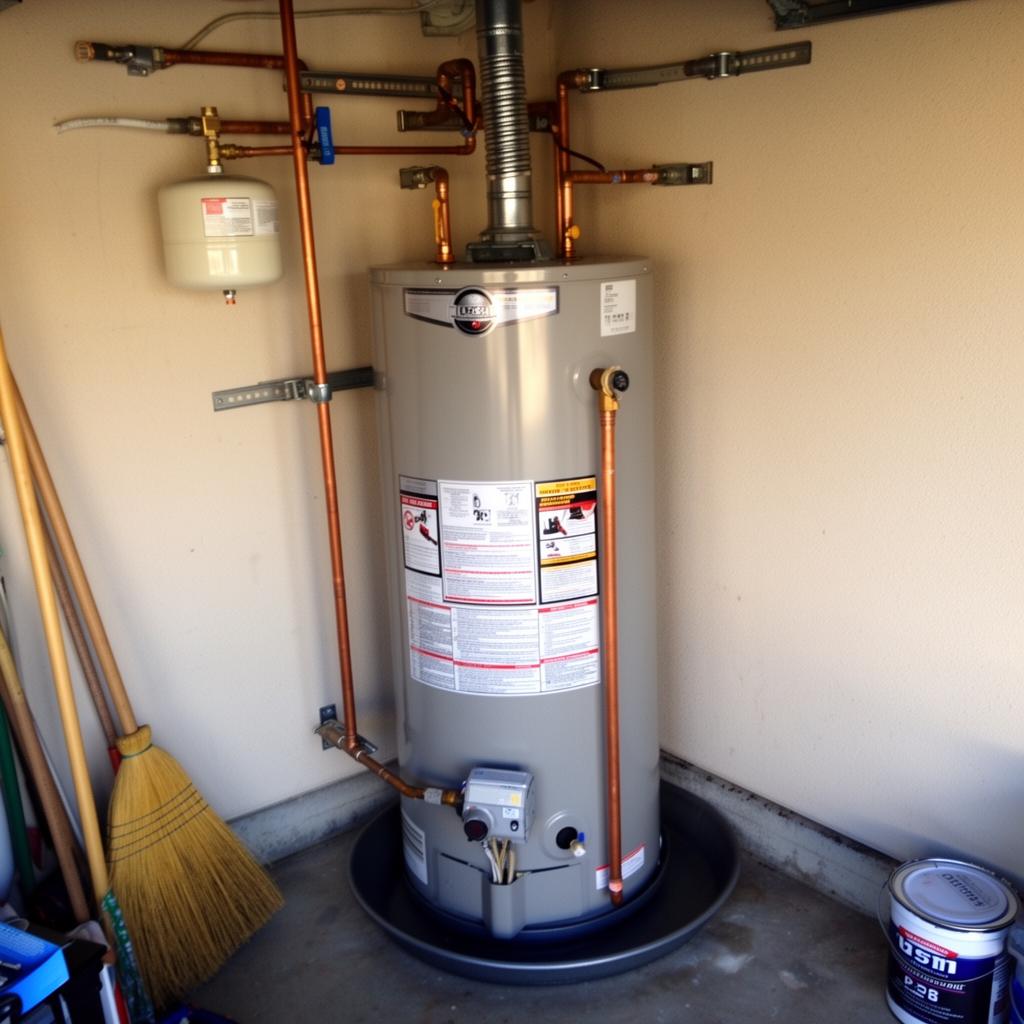
- 2. Permit & code. Every install includes the City of Bellflower permit and CA-code seismic strapping, which matters in this seismic zone and is exactly what an inspector checks first.
- 3. Set & connect. New unit set with a proper drain pan and drain line, correct T&P discharge, and clean water and gas connections.
- 4. Test & haul-away. We fire it, confirm recovery and temperature, check for leaks, and haul the old tank away the same day.
"On the hard water here, we'd rather set you up with a softener alongside a new tank than sell you the same tank again in eight years."
Ready when you are: 213-254-8695, or request a free written quote online.
What we handle on a Bellflower water heater
Repair, tank replacement, or a tankless conversion, we match the fix to the unit and the water, not to whatever's easiest to sell.
Repair & part replacement
Elements, thermostats, thermocouples, gas valves, T&P relief valves and anode rods. We diagnose the fault before quoting so you only replace what's actually failed.
Tank replacement
Standard 40 and 50-gallon swaps with the City of Bellflower permit, seismic strapping, a proper drain pan and drain line, and same-day haul-away of the old unit.
Tankless conversion
Navien and Rinnai installs with correct gas sizing, sealed venting and condensate routing done to code, so the unit runs the way it's rated to.
Hard-water protection
Because the water here scales tanks fast, we'll talk through a softener alongside a new unit so you're not back replacing it early.
Tankless water heater installation in Bellflower
A tankless conversion makes sense when you want endless hot water and a longer service life, commonly 15 to 20 years versus 8 to 12 on a tank. It's a real upgrade, but it's not a drop-in swap, and here's the honest part: tankless units are even more sensitive to scale than tanks are, so on Bellflower's hard water they need a softener or descaling routine to hit that lifespan.
We install Navien and Rinnai units and pull the City of Bellflower permit on every conversion. If a tankless is the right move for your home, we'll tell you; if a good tank plus a softener serves you better for less, we'll tell you that too.
Same-day water heater service
Get a free Bellflower water heater quote
Tell us what's going on and we'll come back with an honest, flat-rate number. Takes about 30 seconds.
Got questions?
Bellflower water heater FAQs
What is usually the most common water heater problem?
On the tank heaters we service in Bellflower, the single most common failure is a burned-out heating element or a failed thermostat on electric units, and a bad thermocouple or gas control valve on gas units. That's what usually causes the classic 'no hot water' or 'lukewarm water' call. Sediment buildup is the runner-up, and it's worse here than average. The hard central-basin groundwater that runs through this part of southeast LA County drops mineral scale to the bottom of the tank, which insulates the burner, makes the tank rumble or pop, and shortens its life. A leak from the tank body itself is the one problem we can't repair, because that's a rusted-through shell, not a part.
Is it worth it to repair a hot water heater?
It depends on two things: the tank's age and where the fault is. If the unit is under about 8 years old and the problem is a part, an element, a thermostat, a thermocouple, a gas valve or the T&P relief valve, a repair is almost always the right call and a fraction of a replacement. If the tank is past 10 to 12 years, or the tank body itself is leaking, repair stops making sense, because you'd be putting a new part into a shell that's on borrowed time. Around here we lean toward checking anode-rod and sediment condition before we quote, since the hard water in Bellflower ages tanks faster than the sticker lifespan suggests. We give you the honest repair-or-replace number in writing and let you decide.
What is the average life of a hot water heater?
A standard tank water heater is generally rated for 8 to 12 years. But that's a national average on softer water. In Bellflower, where the groundwater runs hard, scale collects on the burner and the anode rod gets eaten faster, so we routinely see tank heaters in this housing stock give out closer to the 8-year end than the 12-year end unless they've been flushed and maintained. Tankless units last longer, commonly 15 to 20 years, but they're even more sensitive to scale, which is why we talk through a softener with any tankless conversion here. The takeaway: if your tank is over 10 years old and acting up, its age is doing most of the talking.
How do I tell if my hot water heater element is bad?
On an electric tank heater, a bad element shows up in a few telltale ways. If you get no hot water at all, the upper element or its thermostat has usually failed. If you get a little hot water that runs cold fast, it's typically the lower element. A tripping breaker or a heater that runs constantly without getting to temperature also points at an element or thermostat. The real test is electrical: we shut off power, pull the access panel, and check each element for continuity with a multimeter, an open (no-continuity) reading means the element is burned out. On a gas heater there's no element; a no-hot-water call there points at the thermocouple, pilot or gas control valve instead. We diagnose it before quoting so you're not paying to swap parts on a guess.
Are you licensed, bonded and insured?
Yes. Nava's Elite Plumbing carries a current California master plumber registration, general liability coverage, and workers' comp on every technician. Every water heater install includes the City of Bellflower permit, CA-code seismic strapping, and same-day haul-away of the old unit. A certificate of insurance naming you or your property manager is available on request before we start.